PaperguideOperations Analysis
“Don't build another general AI researcher—build a 'Patent & Academic Paper Interpreter' for inventors and students.”
Worth Studying
Demand appears real and the incumbent looks vulnerable enough to justify deeper validation.
Worth Studying
Demand appears real and the incumbent looks vulnerable enough to justify deeper validation.
Medium-High
Based on revenue, reviews, strategy fit, and visible downside signals in the current dataset.
AppSumo-first signal
This tells you how much of the current read is supported by strong in-platform evidence versus thin or ambiguous signal.
Confirm that premium pricing reflects real willingness to pay, not edge-case packaging.
Operators who know a niche customer segment and can sell a more specialized premium solution.
Generalist founders with no clear customer segment or no path to higher-value buyers.
Competing on 'research' against free, established tools (Elicit) is a race to the bottom. The AppSumo LTD model suggests potential unsustainable API costs if usage is unlimited.
Revenue and review volume suggest this market is real.
There are early signs of friction, but not enough to call it a strong wedge.
Current pricing suggests users may pay enough to support a focused product.
There may be a wedge here, but the competitive gap is still ambiguous.
Still needs off-platform confirmation from search demand, communities, or customer interviews.
“Psychological need for 'academic credibility'—tools that 'cite real sources' provide a shortcut to trusted research, reducing imposter syndrome.”
Competing on 'research' against free, established tools (Elicit) is a race to the bottom. The AppSumo LTD model suggests potential unsustainable API costs if usage is unlimited.
The 4-Dimension Scorecard
$55k revenue validates a market for AI research assistants, but volume is moderate.
Mixed reviews: strong praise but visible bugs and performance complaints against free competitors. High volume of issues = opportunity to fix.
Unclear pricing/LTD risk from AppSumo context. Tool appears to be a wrapper around API calls; cost management is critical.
Competes with Elicit, Afforai, Logically—specialized AI tools, not Google. Opportunity to out-execute on specific use cases.
The Opportunity Radar
Deep Review Mining & Gap Analysis
Pain & Gaps
"Power users want faster output generation without tier restrictions."
"Health professionals note poor accuracy vs. specialized free tools."
Niche Discovery
"Reviewer specifically tested on 'an illness' and compared to medical research tools."
"Multiple mentions of 'academic research', 'study and school', 'research paper'."
"Explicit mention: 'Research paper to patent filing, it all makes it possible'."
"Called out as 'wonderful addition for any content writing or SEO' and 'knowledge storage for marketing'."
Marketing Angle
The AI Research Assistant for Inventors and Academic Filers: Turn Patents & Papers into Products.
Use this angle to position your product against the generic competitors. Focus on the specific pain points identified in the "Pain & Gaps" module.
Counter-Signals
Reasons this opportunity may look better in the dataset than it will feel in the real market.
- Bugs (blank page generation) and feature disappointment (fewer relevant results vs. free tools like Elicit).
Sniper Verdict
“Listen to the hate. Build the cure. Steal the revenue.”
Execution Plan
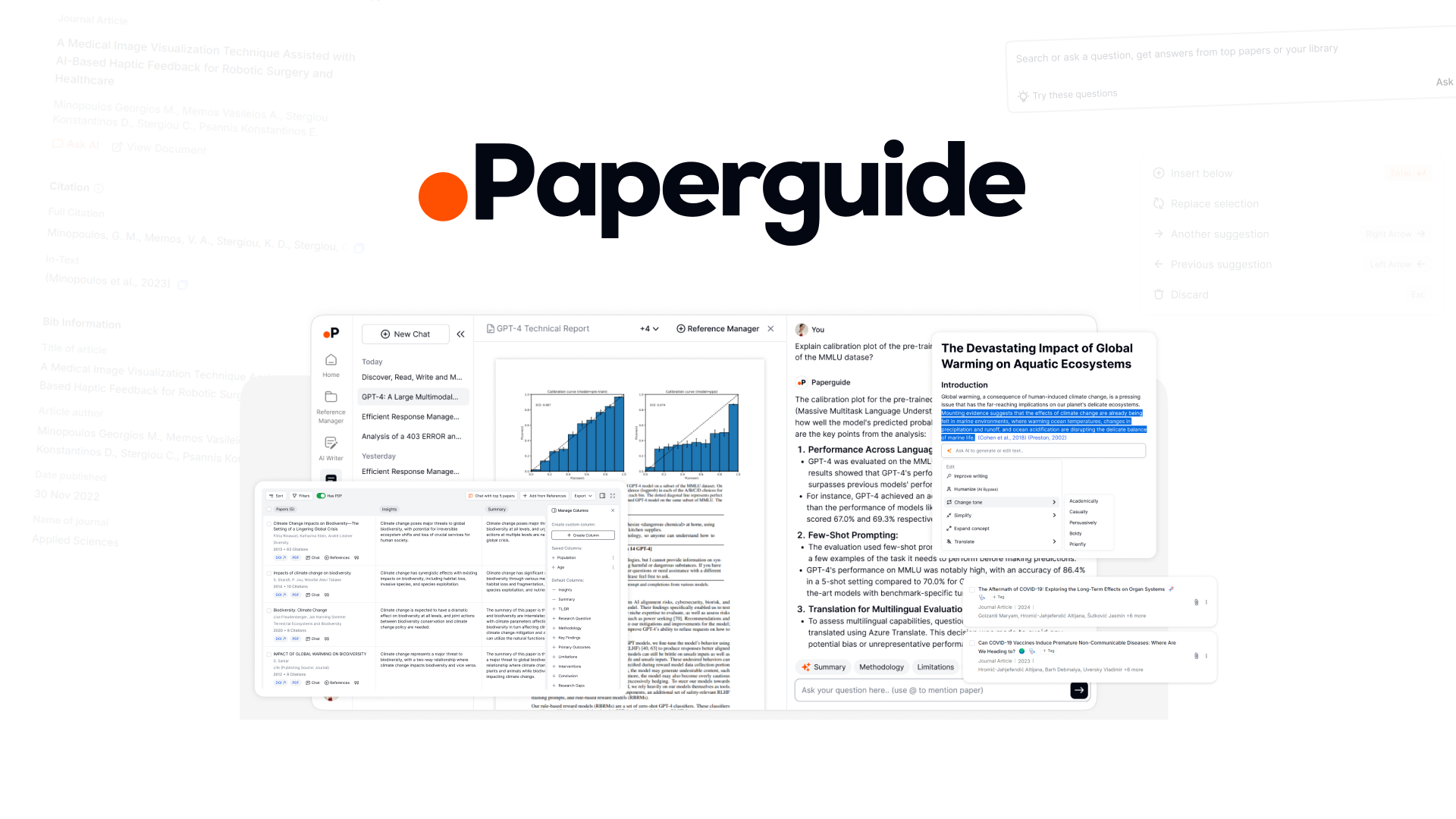
“Paperguide is a generalist AI research tool with scattered niche appeal. The gap is a specialized tool for the high-intent audiences already using it: patent researchers and academic students. They need more accurate, domain-specific outputs than a general tool provides.”
Build First
- Patent claim analyzer & prior art summarizer (for inventors)
- Academic paper 'gap finder' that identifies research opportunities (for students)
- Structured citation exports in APA/MLA (basic but missing)
Do Not Start With
- General 'document writer' for all topics (buggy & broad)
- Trying to beat free tools (Elicit) on general medical queries (costly & hard)
- One-click article generation for all tiers (API cost sink)