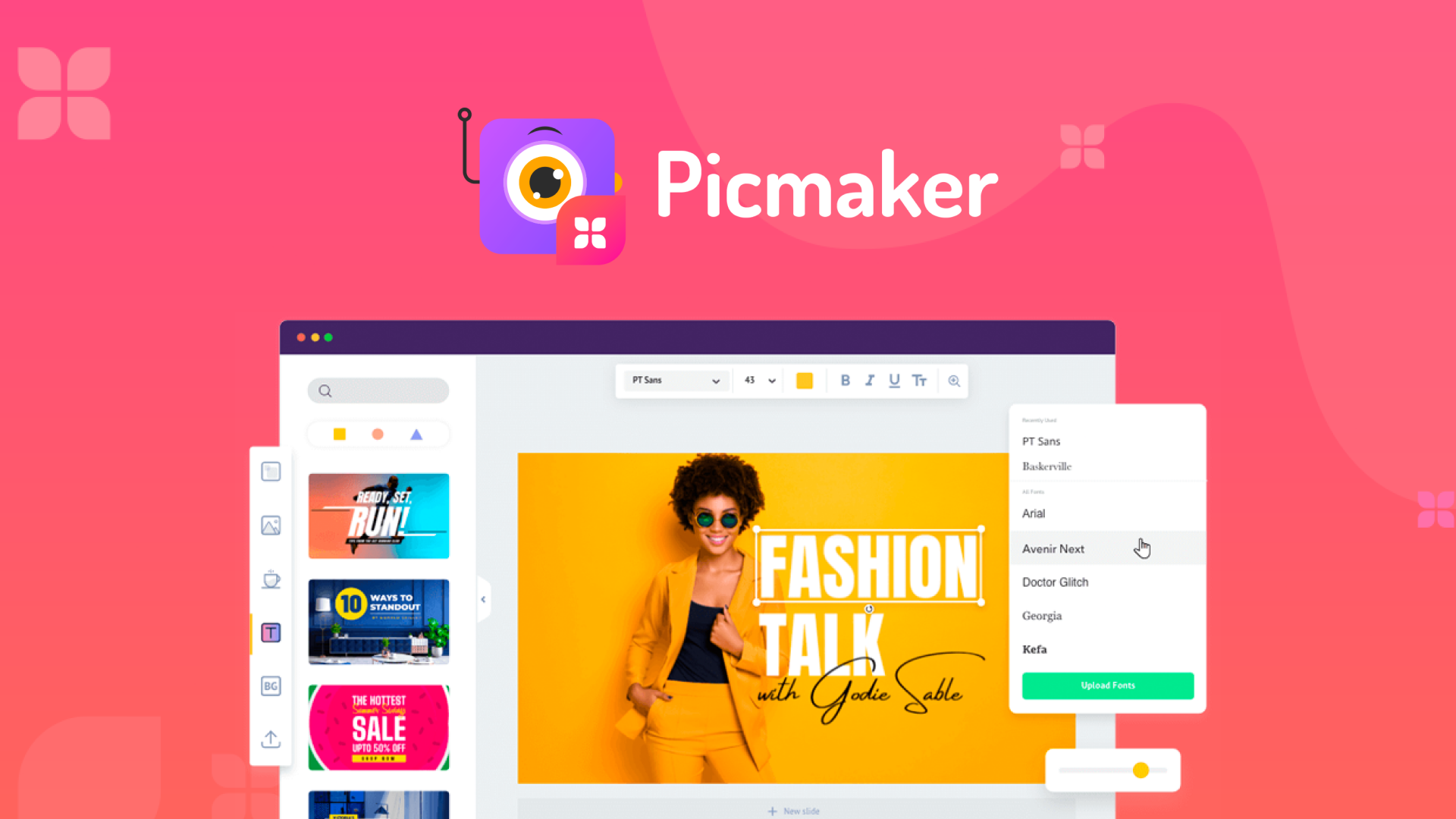
PicmakerMarketing Sales Analysis
“Don't build another Canva clone; build a 'Canva for the Impatient' that actually loads.”
Worth Studying
Demand appears real and the incumbent looks vulnerable enough to justify deeper validation.
Worth Studying
Demand appears real and the incumbent looks vulnerable enough to justify deeper validation.
Medium-High
Based on revenue, reviews, strategy fit, and visible downside signals in the current dataset.
AppSumo-first signal
This tells you how much of the current read is supported by strong in-platform evidence versus thin or ambiguous signal.
Confirm that premium pricing reflects real willingness to pay, not edge-case packaging.
Operators who know a niche customer segment and can sell a more specialized premium solution.
Generalist founders with no clear customer segment or no path to higher-value buyers.
Competing directly with Canva's network effect and template library is a long-term battle. The opportunity is not to out-feature them, but to out-perform them in a specific, painful area (speed). API costs for social scheduling could also scale poorly.
Revenue and review volume suggest this market is real.
There are early signs of friction, but not enough to call it a strong wedge.
There is some willingness to pay, but pricing power is not yet obvious.
There may be a wedge here, but the competitive gap is still ambiguous.
Still needs off-platform confirmation from search demand, communities, or customer interviews.
“Desperation for a Canva alternative without the subscription lock-in. The psychological trigger is 'ownership' (LTD) and escaping Canva's monopoly.”
Competing directly with Canva's network effect and template library is a long-term battle. The opportunity is not to out-feature them, but to out-perform them in a specific, painful area (speed). API costs for social scheduling could also scale poorly.
The 4-Dimension Scorecard
Strong $105k+ revenue validates demand for Canva alternatives, especially on a lifetime deal.
High rating (4.69) shows core value, but numerous 'slow' complaints reveal a critical, fixable weakness that creates an opening.
No unlimited AI/storage red flags. Model based on design assets and scheduling is stable. High-ticket LTD is risky but revenue proves demand.
Competitors are established giants (Buffer, Hootsuite, Canva), but they are bloated and expensive. The wedge is speed and simplicity.
The Opportunity Radar
Deep Review Mining & Gap Analysis
Pain & Gaps
"Multiple reviews cite slowness as a primary reason for dissatisfaction. This is a fundamental UX failure."
"Reviews hint at missing platforms. Users want a true all-in-one scheduler, not a partial one."
"Compared directly to Canva's library. Users see potential but want more, newer templates to feel current."
Niche Discovery
"Reviews mention 'for my agency' and value in 'brand kits' and multi-user licenses for team use."
"LTD buyers explicitly comparing value to Canva's subscription, seeking professional results on a budget."
Marketing Angle
The Canva alternative that doesn't waste your time. Built for speed, priced for keeps.
Use this angle to position your product against the generic competitors. Focus on the specific pain points identified in the "Pain & Gaps" module.
Counter-Signals
Reasons this opportunity may look better in the dataset than it will feel in the real market.
- Performance. The product is described as 'pretty slow', 'unpleasant to use', and 'Canva version 2018'. Users need speed; they get lag.
Sniper Verdict
“Listen to the hate. Build the cure. Steal the revenue.”
Execution Plan
“Picmaker proves the market wants a Canva alternative but fails on core performance. The gap is a design/scheduling tool engineered for speed first, features second. Users are begging for a product that loads and renders instantly, not another bloated clone.”
Build First
- Blazing-fast core editor (prioritize render speed over fancy features)
- Essential social scheduler (5 key platforms, rock-solid API connections)
- Curated, high-converting template library (quality over quantity)
Do Not Start With
- AI image generation (costly, distracting)
- Excessive stock photo library (license costs)
- Trying to match Canva's 10,000+ features (bloat)